Hexagon socket countersunk head screw
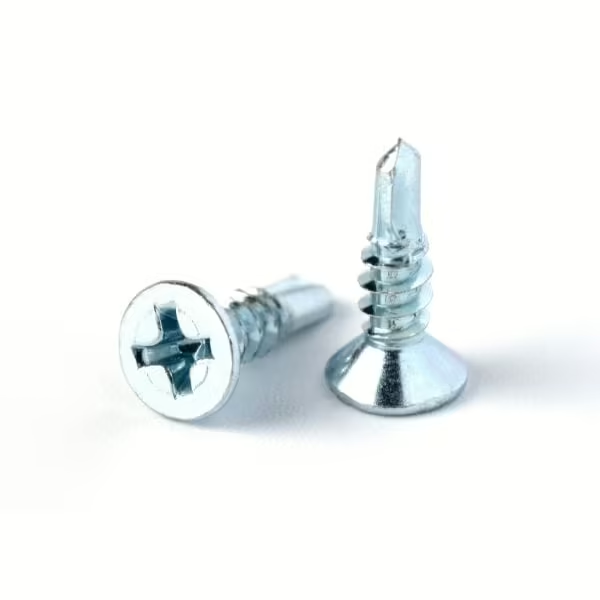
Hexagon Socket Countersunk Screws are precision fasteners designed to sit flush with the surface of the workpiece, creating a smooth, snag-free finish. Manufactured to DIN 7991 / ISO 10642 standards, these screws feature a conical flat head that fits perfectly into a countersunk hole. Driven by an internal hexagonal key, they are the ideal solution for aerodynamic applications, moving machinery parts, and aesthetic assemblies where a protruding screw head would be obstructive or unsightly.
- Flush Installation: The 90-degree conical head allows the screw to sink completely into the material, leaving a flat, smooth surface.
- Internal Drive: The hexagon socket drive enables high-torque tightening without the risk of the tool slipping, even in recessed positions.
- Inventory Support: We stock a comprehensive range of metric sizes, ensuring you have the right fit for your manufacturing or maintenance needs.
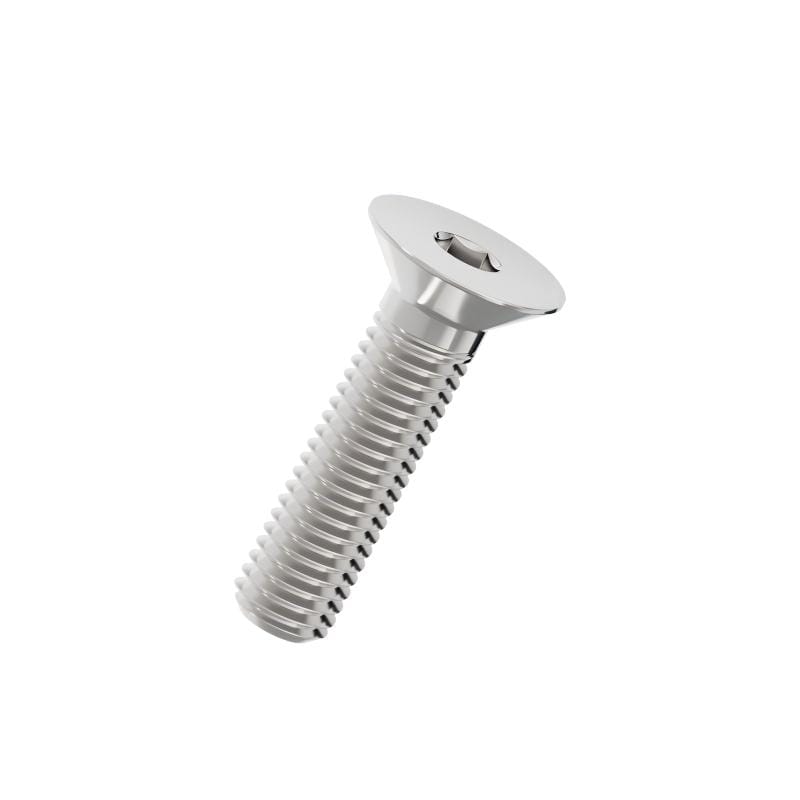
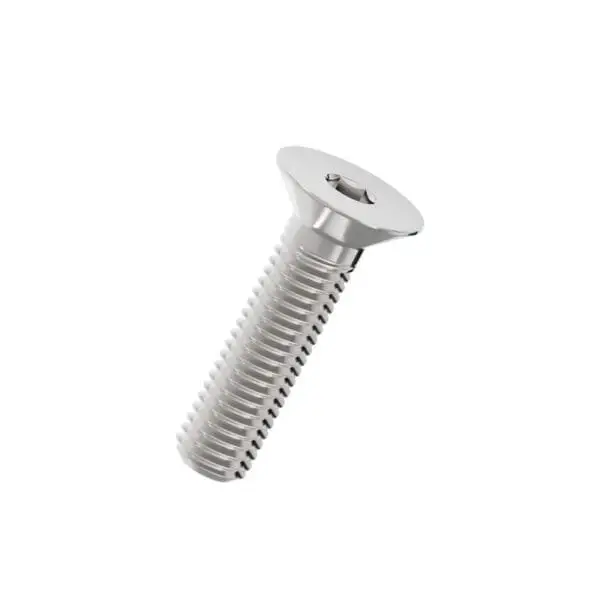
Understanding the Countersunk Geometry
The defining feature of the Hexagon Socket Countersunk Screw is its head. Unlike cap screws or button heads which sit on top of the material, the countersunk head is shaped like an inverted cone. This requires the hole in the workpiece to be "countersunk"—machined with a matching conical chamfer. This design is critical for applications where parts must slide over one another without interference, such as in wear plates, guide rails, or flush panels.Design Considerations (DIN 7991)
Load Bearing Capacity: It is important to note that due to the geometry of the flat head, countersunk screws have a slightly different load distribution than cap screws. They are excellent for centering the part (the cone shape self-centers the screw in the hole), but they generally have a lower maximum load capacity than a standard cylindrical cap screw of the same size. Standard Angle: Our metric countersunk screws typically feature a standard 90-degree inclusive angle. This is the international standard for metric fasteners. Please check your countersink tool to ensure it matches this angle for a perfect flush fit.Quality Assurance
Product reliability is essential. We can provide an EN 10204 3.1 Material Certificate upon request to verify the chemical composition of the material batch. Please note that third-party inspection services require an additional fee.Common Industrial Applications
Countersunk screws are utilized wherever a smooth surface is required:- Machinery Slides: Securing wear strips and guides where moving parts pass over the screw head.
- Aerospace & Automotive: Aerodynamic exterior panels where air resistance must be minimized.
- Consumer Products: High-end electronics and furniture where visible screws must look integrated and sleek.
- Tooling: Fastening jigs and fixtures that require a flat base.