Self-Drilling Screw
High-Efficiency Stainless Steel Tek Screws
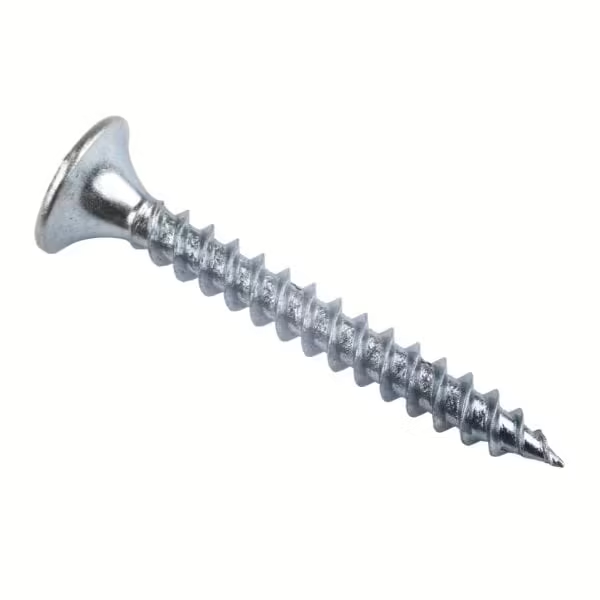
Accelerate your installation time with our professional range of self-drilling screws (often referred to as Tek screws). Engineered with a drill-bit point, these fasteners eliminate the need for pre-drilled pilot holes by drilling, tapping, and fastening in a single operation. Our inventory specifically caters to diverse environmental needs, offering hardened Stainless Steel 410 for penetrating metal sheets and Stainless Steel 304/316 for applications requiring maximum weather resistance.
- Material Versatility: Choose from heat-treated SS 410 for hardness or SS 304/316 for marine-grade protection.
- Bulk & Retail Ready: Available in bulk quantities for construction projects or smaller packs for inventory restocking.
- Reliable Inventory: Consistent stock levels ensuring rapid fulfillment for urgent B2B orders.
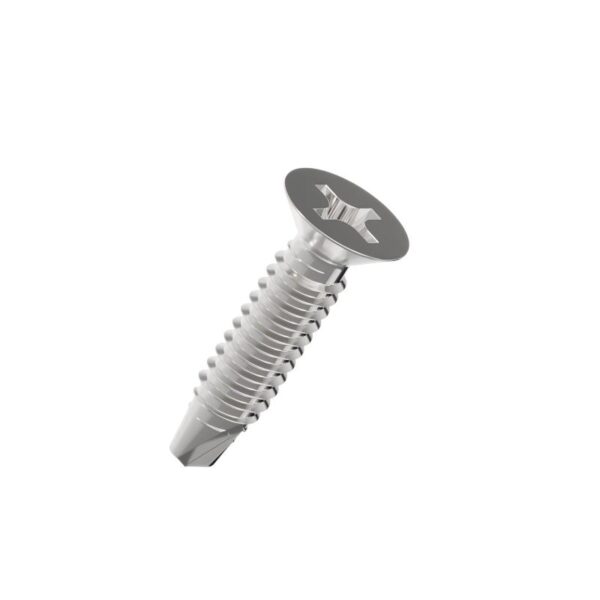


What Are Self-Drilling Screws?
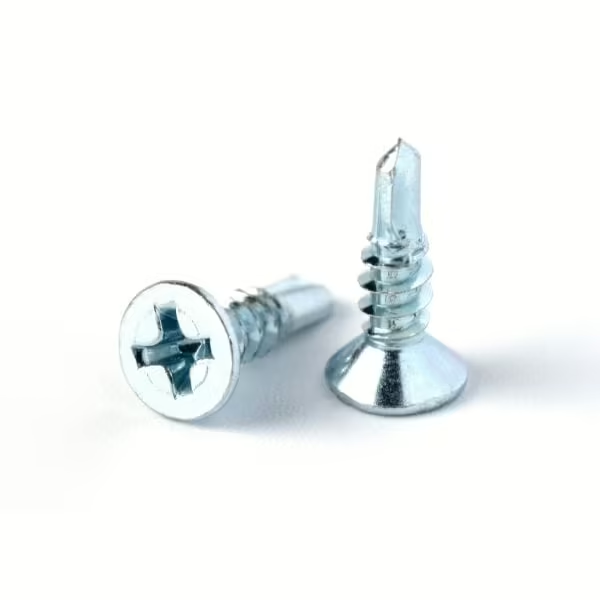
Self-drilling screws are easily identified by their tip, which resembles a drill bit. Unlike standard self-tapping screws that require a pre-drilled pilot hole, self-drilling screws cut their own hole through the substrate. They are widely used in roofing, HVAC, and cladding industries to attach metal to metal or metal to wood. We offer various head styles including Hex Washer Head (for high torque) and Countersunk (for flush finishing).Material Guide: Hardness vs. Corrosion Resistance
Selecting the correct stainless steel grade for self-drilling screws is a trade-off between drilling capacity and rust resistance. Stainless Steel 410 is magnetic and hard, while 304 and 316 are non-magnetic and corrosion-resistant but softer.| Material Grade | Steel Type | Drilling Capability | Corrosion Resistance |
|---|---|---|---|
| SS 410 | Martensitic (Hardened) | Excellent. Can drill through carbon steel sheets and structural steel. | Moderate. Will surface rust over time in outdoor elements without coating. |
| SS 304 (A2) | Austenitic (Soft) | Limited. Suitable for drilling aluminum, plastics, or wood. Cannot drill thick steel. | High. Standard for outdoor construction. |
| SS 316 (A4) | Austenitic (Soft) | Limited. Suitable for aluminum, plastics, or wood. Cannot drill thick steel. | Superior. Essential for marine and chemical environments. |