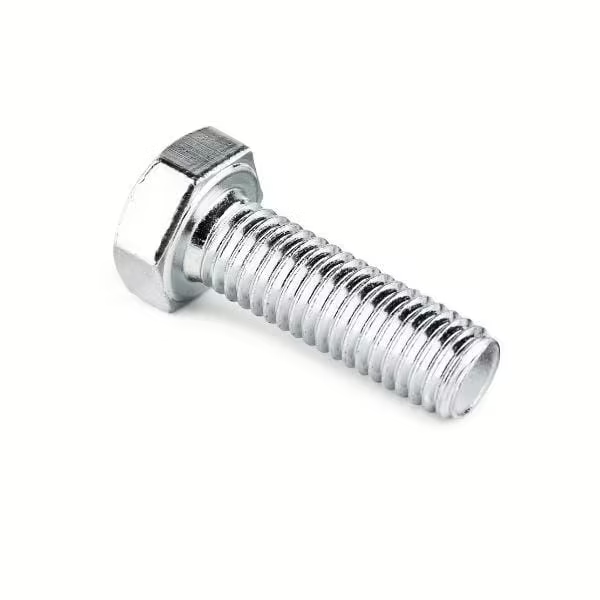
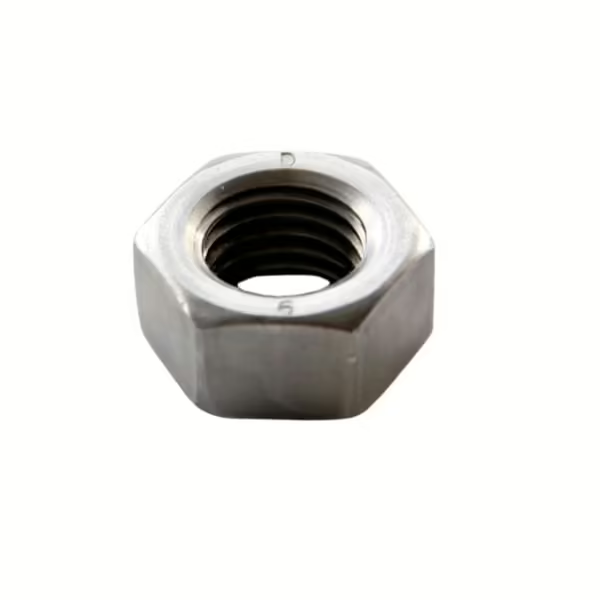
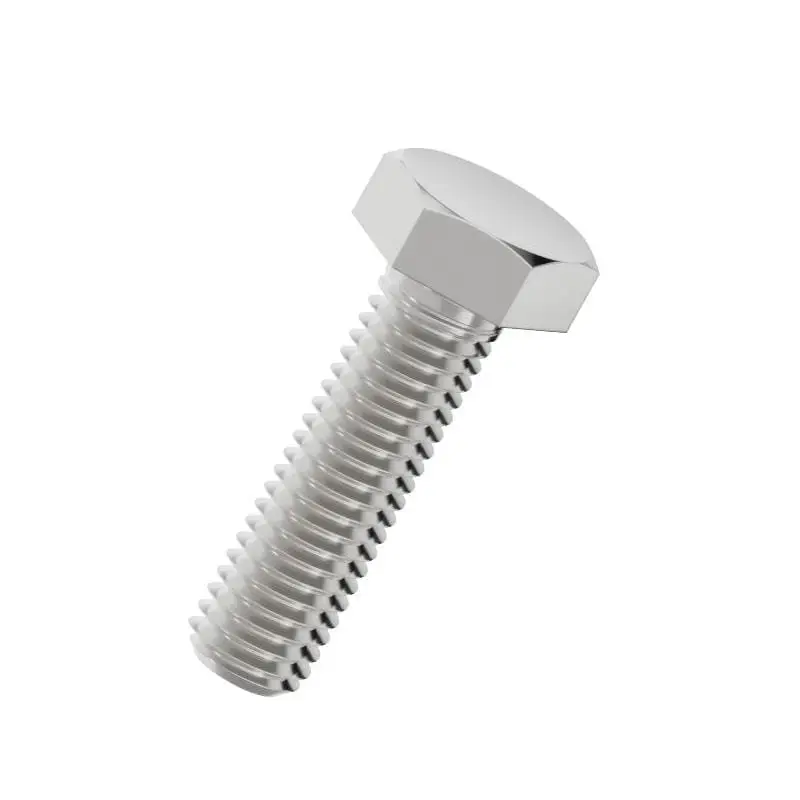
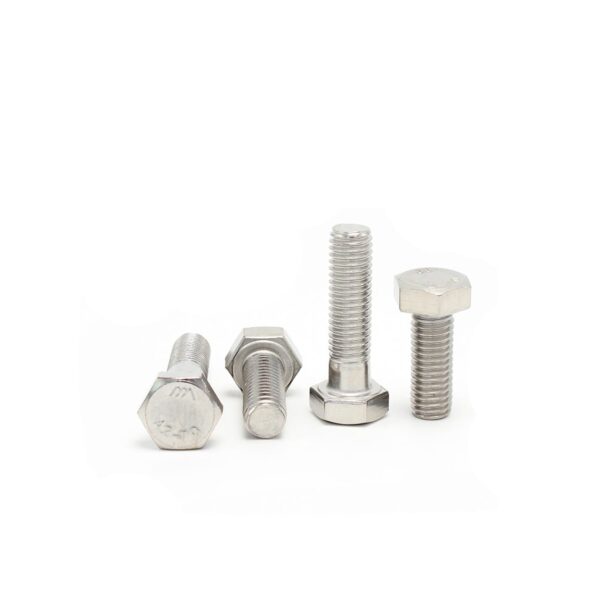
316L - Stainless steel - Hexagon bolt
Low Carbon 316L Stainless Steel Hexagon Bolts
316L stainless steel hexagon bolts represent the premium tier of the A4 fastener family, designed for applications demanding the highest level of corrosion immunity. The "L" denotes "Low Carbon," a crucial chemical modification that minimizes the risk of sensitization at the grain boundaries. These bolts combine the heavy-duty clamping power of the hexagonal drive with a material composition that excels in severe chemical environments and welded assemblies.
- Advanced Composition: Features a reduced carbon content (maximum 0.03%) alongside molybdenum, significantly reducing the risk of intergranular corrosion.
- Secure Fastening: The precision-forged hex head allows for the application of high torque values using standard wrenches, ensuring tight, reliable joints.
- Stock Availability: We maintain a comprehensive inventory of standard sizes on our floor, ensuring your critical components are ready for immediate dispatch.
Showing 1–24 of 276 results

Technical Advantages of 316L Hex Bolts
Hexagon bolts made from 316L stainless steel are often specified in the most rigorous engineering standards. While they share the same physical dimensions and drive style as standard bolts, their metallurgical structure provides an extra layer of insurance against failure. They are particularly favored in industries where maintenance access is difficult or costly, necessitating a "fit and forget" solution.316 vs. 316L: Material Comparison
The primary difference lies in the carbon content. While both grades contain molybdenum for pitting resistance, 316L is engineered to prevent carbide precipitation, which can occur during manufacturing or if the bolt is used in high-temperature zones.| Feature | Standard 316 (A4) | Low Carbon 316L |
|---|---|---|
| Carbon Content | Max 0.08% | Max 0.03% |
| Corrosion Risk | Excellent, but susceptible to grain boundary decay if heated/welded. | Superior. Immune to sensitization (carbide precipitation). |
| Primary Use | General Marine & Chemical | Welded structures, Pharmaceutical, Nuclear |
Quality Assurance and MTC
Verification is key for high-spec materials like 316L. Fastener Core provides EN 10204 3.1 Material Test Certificates (MTC) free of charge upon request. This document is essential for confirming that the carbon content is indeed below the 0.03% threshold required for the "L" designation. Please verify your requirement for third-party inspection services, as these incur additional costs.Industrial Applications
316L hex bolts are critical in sectors with zero tolerance for corrosion:- Pharmaceutical Manufacturing: Equipment assembly where product purity and cleanability are paramount.
- Petrochemical Plants: Flanges and valves exposed to sour gas or chlorides.
- Pulp and Paper: Machinery exposed to bleaching chemicals.
- Medical Implants/Devices: External fixation devices requiring biocompatibility (due to low carbon).