
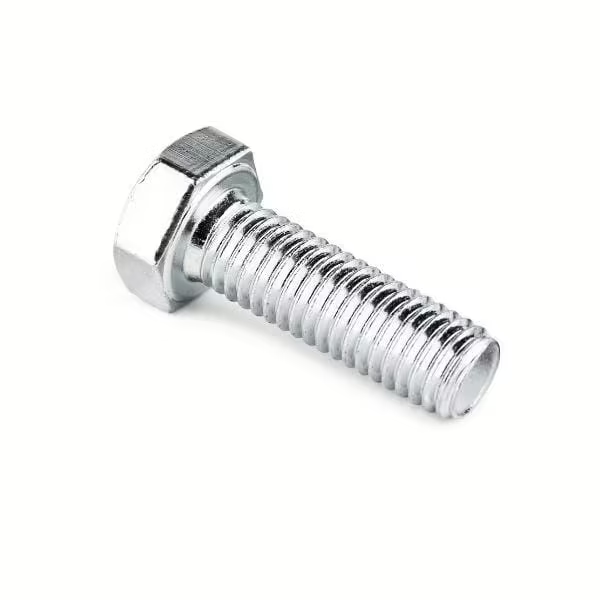
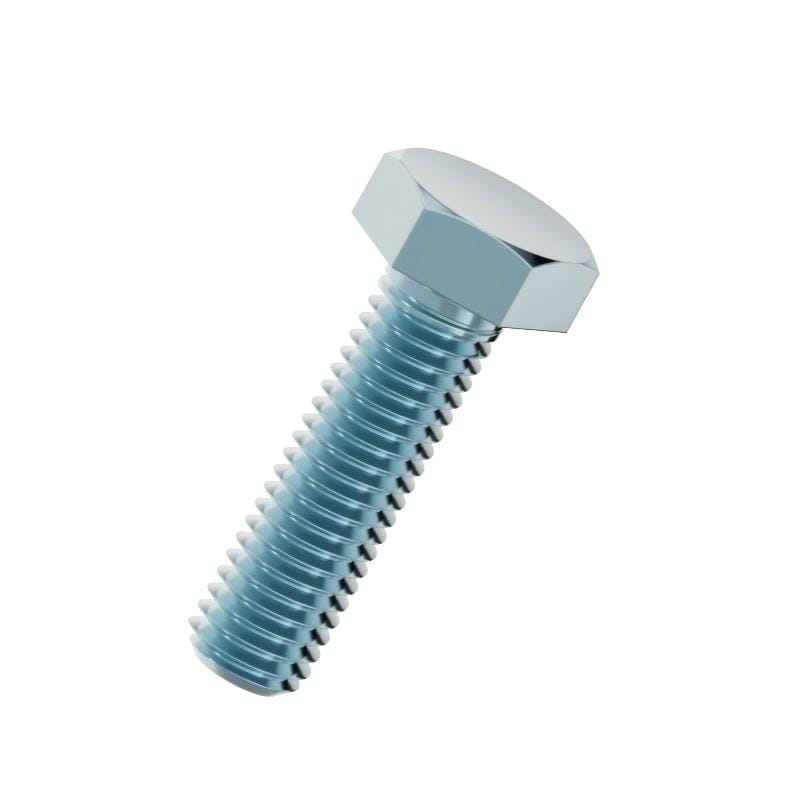
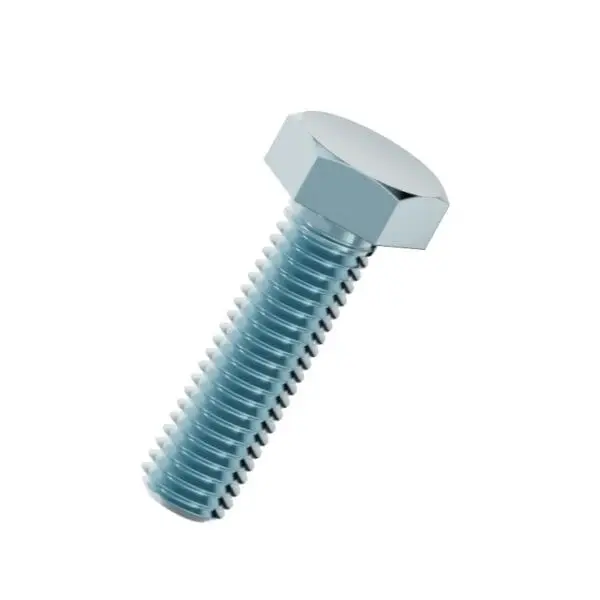
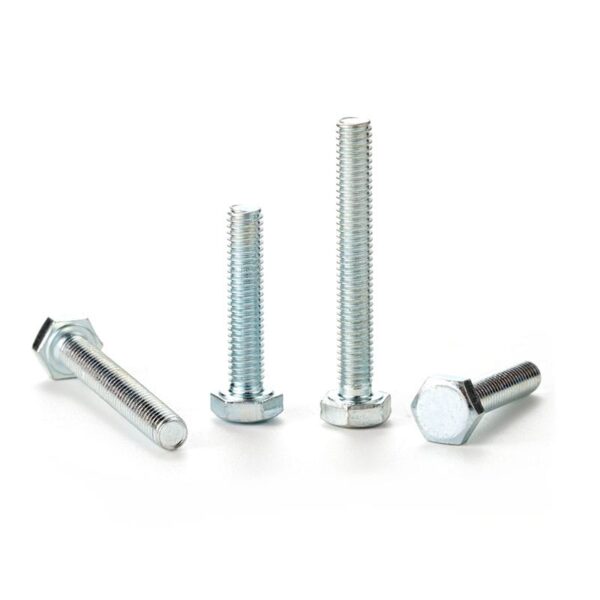
12.9 Grade – White zinc – Hexagon bolt
Grade 12.9 hexagon bolts represent the pinnacle of strength in standard metric fastening. Manufactured from premium alloy steel, these bolts are quenched and tempered to achieve an impressive minimum tensile strength of 1200 N/mm². They are the ultimate choice for critical applications where maximum clamping force is required within a compact space. The white zinc plating provides a clean finish and temporary corrosion protection, allowing these high-performance components to be used in precision machinery and heavy engineering.
- Maximum Strength: The highest strength class available for standard fasteners (1200 MPa), offering unparalleled load-bearing capacity.
- Alloy Construction: Made from superior alloy steel to ensure exceptional hardness and resistance to fatigue.
- Precision Use: Designed for applications requiring immense clamping loads, such as hydraulic presses and injection molding machinery.
Showing 1–24 of 137 results
Grade 12.9 Technical Overview
Grade 12.9 bolts are strictly for engineering scenarios where failure is not an option. They offer a tensile strength that is 50% higher than Grade 8.8 and 20% higher than Grade 10.9. However, this extreme strength comes with a trade-off: increased hardness means reduced ductility. Therefore, these bolts should be used in rigid connections where shock loading is minimized.Mechanical Properties Specification
The "12.9" designation on the bolt head conveys the following critical data according to ISO 898-1:| Property | Value | Implication |
|---|---|---|
| Tensile Strength | 1200 N/mm² (Min) | Offers the highest resistance to snapping under tension. |
| Yield Strength | 1080 N/mm² (Min) | 90% of tensile strength. Allows for extremely high torque settings and preload. |
| Hardness (Rockwell C) | 39-44 HRC | Very hard surface, requiring high-strength tools for installation. |
Quality Assurance
For such critical components, verifying material quality is essential. We can provide an EN 10204 3.1 Material Certificate upon request to validate the alloy steel composition. Please note that third-party inspection services require an additional fee.Advanced Industrial Applications
Grade 12.9 bolts are typically found in the heaviest and most demanding machinery:- Hydraulics: Fastening hydraulic cylinders and pumps operating under extreme pressure.
- Forging & Stamping: Used in die-casting machines and forging presses.
- Engine Components: Connecting rods and main bearing caps in high-performance engines.
- Heavy Earthmoving: Critical pivot points on excavators and bulldozers.