
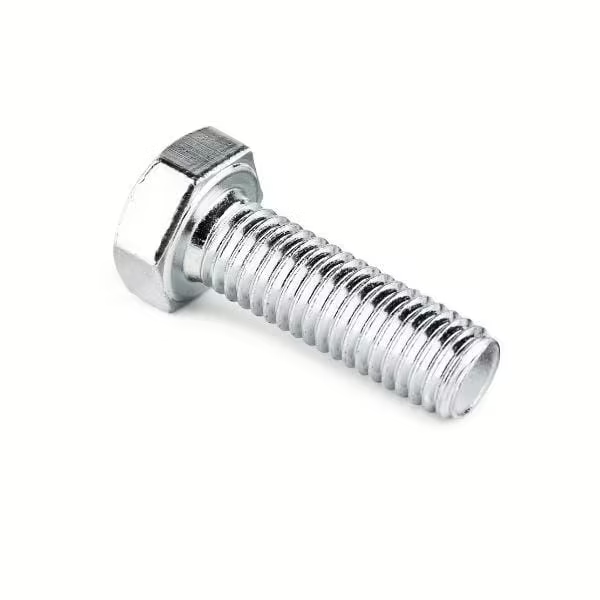
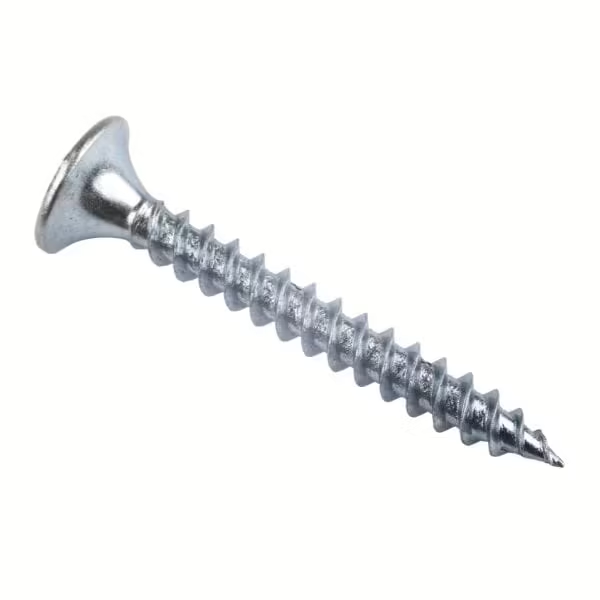
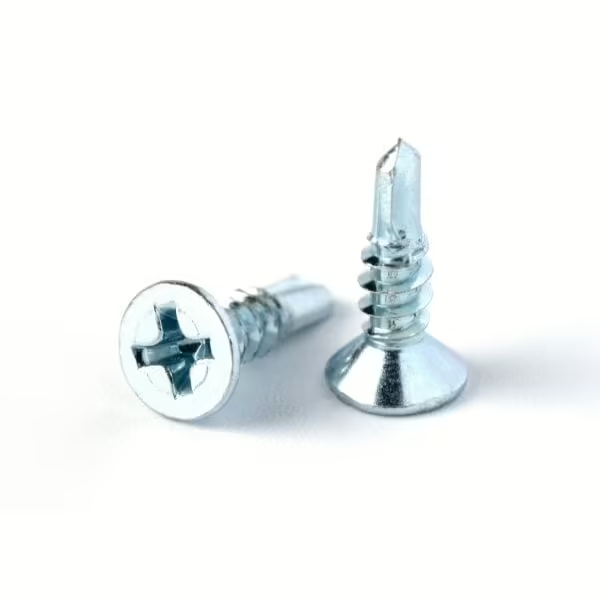
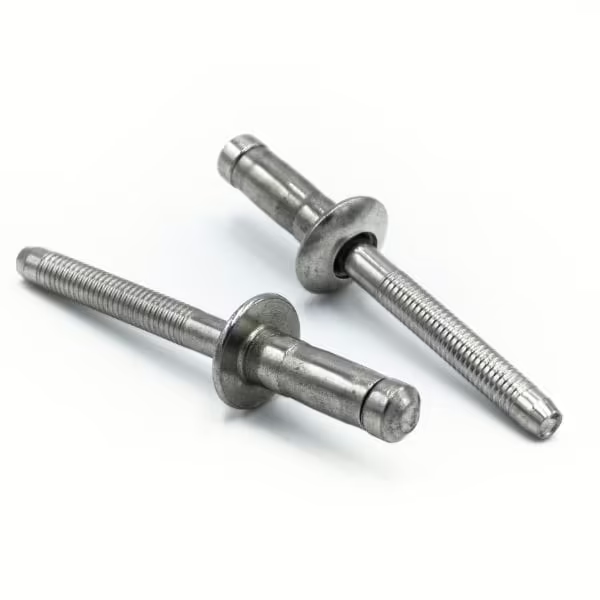
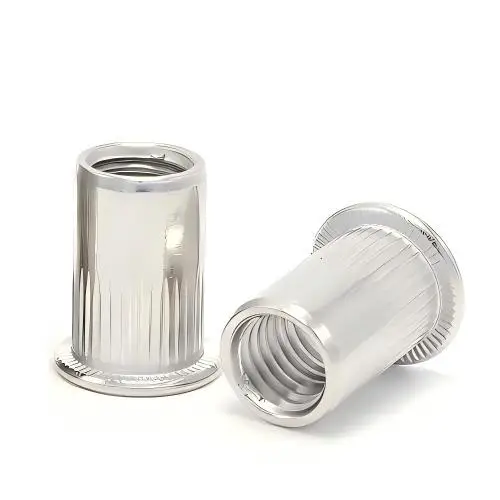
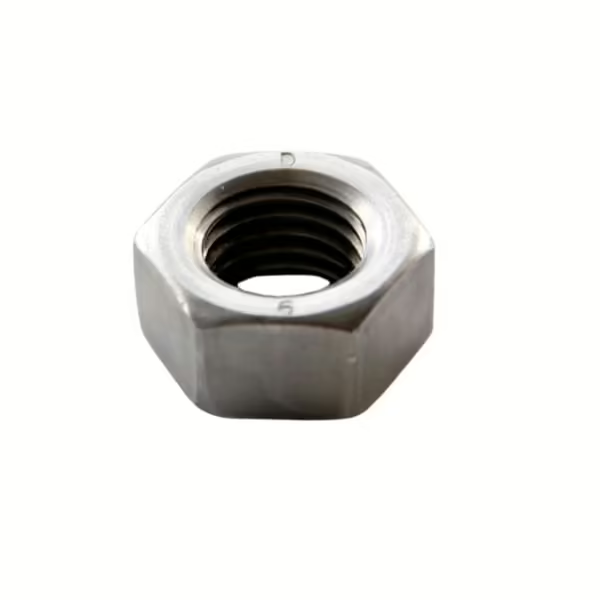
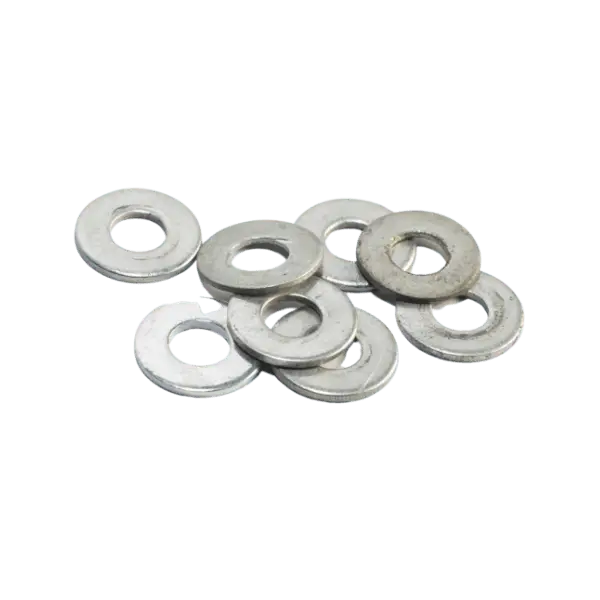

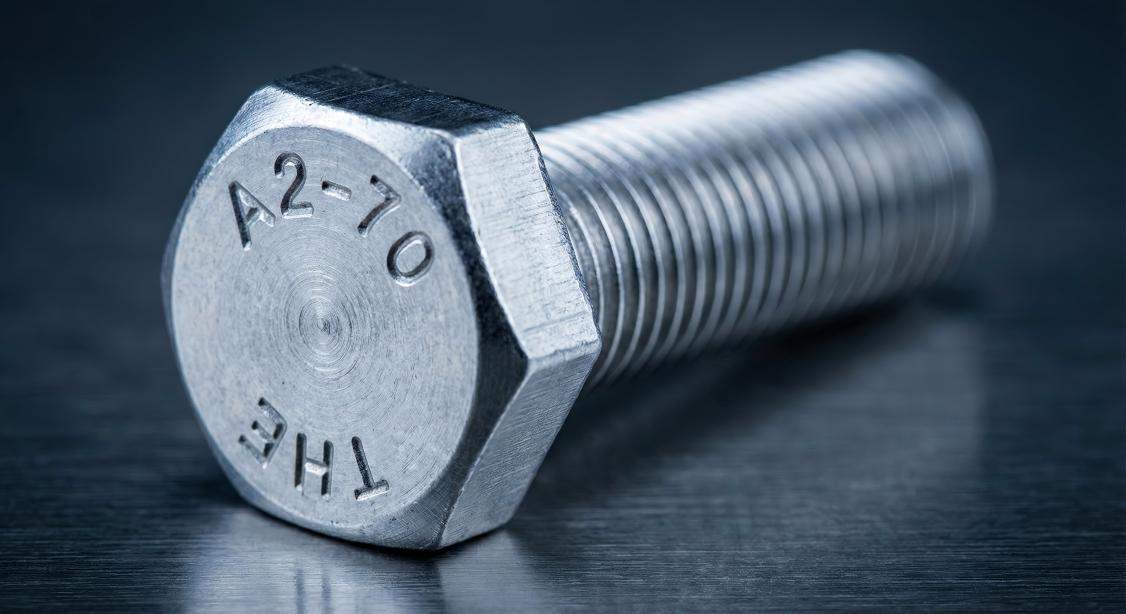
304 Stainless Steel (designated as UNS S30400 in the Unified Numbering System and 1.4301 in European EN standards) represents the most widely specified austenitic stainless steel in global engineering applications. Often referred to as “18-8” stainless due to its nominal composition of 18% Chromium and 8% Nickel, this alloy provides a foundational balance of corrosion resistance, formability, and mechanical strength.
For fastener engineers and quality control managers, understanding the distinction between raw material specifications (such as ASTM A240) and fastener-specific mechanical requirements (such as ISO 3506 Class A2-70) is critical for ensuring structural integrity.
1. International Standards & Cross-Reference Specifications
We utilize specific international designations to ensure material traceability across global supply chains. The following table correlates the primary standards governing Grade 304.
| Region / Body | Standard / Designation | Classification / Grade |
|---|---|---|
| USA (ASTM/AISI) | ASTM A240 / ASTM A276 | Type 304 |
| USA (UNS) | ASTM E527 | S30400 |
| Europe (EN/DIN) | EN 10088-3 | 1.4301 / X5CrNi18-10 |
| International (ISO) | ISO 3506 (Fasteners) | A2 Group (e.g., A2-70, A2-80) |
| Japan (JIS) | JIS G4303 | SUS 304 |
2. Chemical Composition (ASTM A240 / ASTM F593)
The metallurgical stability of UNS S30400 relies on strict adherence to chemical limits. The presence of Chromium (Cr) exceeds 18%, which facilitates the formation of the passive chromium-oxide surface layer essential for corrosion resistance.
| Element | Symbol | Minimum % | Maximum % |
|---|---|---|---|
| Carbon | C | – | 0.08 |
| Manganese | Mn | – | 2.00 |
| Phosphorus | P | – | 0.045 |
| Sulfur | S | – | 0.030 |
| Silicon | Si | – | 0.75 |
| Chromium | Cr | 18.0 | 20.0 |
| Nickel | Ni | 8.0 | 10.5 |
| Nitrogen | N | – | 0.10 |
Note: For welded applications requiring resistance to carbide precipitation, engineers should consider Grade 304L (UNS S30403), which restricts Carbon to max 0.03%.
3. Mechanical Properties
Mechanical performance varies significantly depending on the product form (bar stock vs. finished fastener). Fasteners often exhibit higher tensile strengths due to work hardening during the cold heading process.
3.1 Raw Material Properties (Annealed Condition)
Comparison based on ASTM A240 for plate, sheet, and strip.
| Property | Metric (SI) | Imperial (US) |
|---|---|---|
| Ultimate Tensile Strength (UTS) | ≥ 515 MPa | ≥ 75 KSI |
| Yield Strength (0.2% Offset) | ≥ 205 MPa | ≥ 30 KSI |
| Elongation (in 50mm) | ≥ 40% | ≥ 40% |
| Hardness (Brinell) | Max 201 HB | Max 201 HB |
3.2 Fastener Specific Properties (ISO 3506-1)
When 304 stainless steel is manufactured into bolts, screws, and studs, we classify them under the Austenitic A2 group. Cold working increases strength significantly.
| Original Grade | Property Class | Tensile Strength (Rm) | Yield Strength (Rp0.2) |
|---|---|---|---|
| Type 304 | A2-50 (Soft) | Min 500 MPa | Min 210 MPa |
| Type 304 | A2-70 (Cold Worked) | Min 700 MPa | Min 450 MPa |
| Type 304 | A2-80 (High Strength) | Min 800 MPa | Min 600 MPa |
4. Physical Properties
Thermodynamic and physical data are crucial for calculating expansion in high-temperature joints to prevent clamp load loss or galling.
- Density: 7.98 g/cm³ (0.29 lb/in³)
- Melting Range: 1400°C – 1455°C (2552°F – 2651°F)
- Modulus of Elasticity: 193 GPa (28.0 x 10⁶ psi)
- Thermal Conductivity (at 100°C): 16.3 W/m·K
- Electrical Resistivity: 720 nΩ·m
- Magnetic Permeability: Typically < 1.02 (Non-magnetic in annealed state).
Note: Cold working (drilling, heading) induces partial transformation to martensite, causing fasteners to become slightly magnetic.
5. Corrosion Resistance & Environment Suitability
5.1 Atmospheric and Chemical Resistance
Grade 304 exhibits excellent resistance to a wide range of atmospheric environments and many corrosive media. It resists organic chemicals, dyestuffs, and a wide variety of inorganic chemicals. It performs passably in oxidizing acids, such as nitric acid, due to the Chromium content.
5.2 Chloride Sensitivity (Pitting Corrosion)
We strongly advise against using Grade 304 in environments with high chloride concentrations, such as marine environments (seawater) or de-icing salt exposure. Technical data indicates that 304 is susceptible to pitting and crevice corrosion in warm chloride environments and to stress corrosion cracking above 60°C.
For marine applications, engineers should specify Type 316 (A4 Group), which contains Molybdenum for enhanced chloride resistance.
5.3 Sensitization and Intergranular Corrosion
If 304 stainless steel is heated between 425°C and 860°C (800°F – 1580°F), chromium carbides precipitate at the grain boundaries. This creates chromium-depleted zones, rendering the material susceptible to intergranular corrosion.
5.4 Magnetic Permeability and Demagnetization Protocols
A common technical misconception is that 304 stainless steel is inherently non-magnetic. While UNS S30400 is paramagnetic (non-magnetic) in its fully annealed state with a magnetic permeability (µ) near 1.02, standard fastener manufacturing processes alter this property.
Mechanism of Induced Magnetism
The cold working operations required to manufacture fasteners—such as wire drawing, cold heading, and thread rolling—induce severe plastic deformation. This mechanical stress triggers a partial phase transformation in the microstructure, converting the face-centered cubic (FCC) Austenite phase into the body-centered tetragonal (BCT) Martensite phase. Since Martensite is ferromagnetic, the resulting fastener (specifically in the thread and head zones) will exhibit a measurable magnetic response.
Demagnetization (Solution Annealing)
For applications strictly requiring low magnetic permeability (e.g., MRI equipment or sensitive electronic housings), “demagnetization” is achieved not by magnetic field manipulation, but by thermal processing. We revert the material structure through Solution Annealing.
Note: Solution annealing typically reduces the tensile strength from the strain-hardened levels (e.g., Class A2-70) back to the annealed baseline (Class A2-50). Engineers must calculate the trade-off between magnetic non-permeability and mechanical load capacity.
6. Application Engineering
Based on the properties detailed above, Grade 304 is the standard specification for the following industrial sectors:
- Food Processing Equipment: Due to cleanability and resistance to organic acids (Milk, Beer, Wine processing).
- Cryogenic Fasteners: 304 maintains toughness at liquid gas temperatures.
- Pressure Vessels: Per ASME Boiler and Pressure Vessel Code limitations.
- Architectural Paneling: For non-marine exterior and interior applications.
- General Fastening: Standard ISO 4017 / 4014 bolts used in machinery assembly where standard steel would rust.
Disclaimer: The data presented in this specification sheet serves as a technical reference under standard testing conditions. Final material selection must be validated by a qualified engineer against specific application loads and environmental factors.
Reference Standards Documents
Click below to expand and view, or click “Download” on the right.